
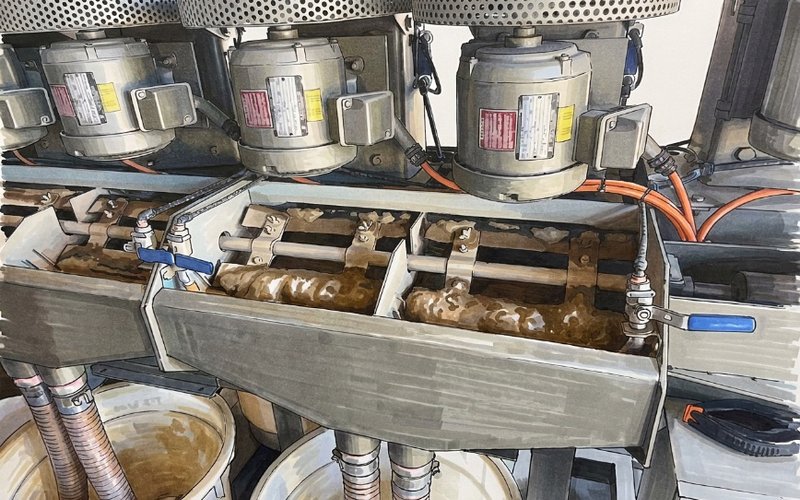

- 01CMG targets mine-to-market vanadium with electrolyte.
- 02Lindfield: 713 Mt @0.32% V2O5; ~10ktpa V2O5.
- 03Electrolyte plant planned at Parkes, NSW.
Critical Minerals Group (ASX: CMG) is advancing a mine-to-market strategy focused on battery-grade vanadium, targeting both primary extraction and downstream energy storage applications.
Headquartered in Queensland, the company is building an integrated supply chain anchored by its flagship Lindfield Vanadium Project in north-west Queensland, alongside plans for downstream electrolyte production.
As global demand grows for long-duration energy storage systems, CMG is aiming to supply critical raw materials and processed chemical components necessary for next-generation grid storage solutions.
Company Background and Strategy
Critical Minerals Group listed on the ASX with a strategic focus on acquiring, exploring, and developing critical mineral assets. The company was established around broad macro trends of global decarbonisation, energy transition, and electrification.
While its asset portfolio includes early-stage exploration targets such as greenfield copper-gold projects (including Figtree Creek and Lorena Surrounds), the primary operational concentration remains centred on vanadium development.
CMG’s strategy differs from traditional pure-play miners by adopting a vertically integrated approach. Rather than relying solely on upstream raw mineral sales, the company plans to establish processing capabilities that allow it to supply finished battery-grade vanadium electrolyte directly to industrial customers and battery energy storage system manufacturers.
Lindfield Vanadium Project
The core of CMG’s portfolio is the Lindfield Vanadium Project, situated approximately 30 kilometres east of Julia Creek in north-west Queensland. The Julia Creek region is widely recognised for hosting extensive shallow vanadium deposits.
Key details regarding the Lindfield asset include:
- Mineral Resource: The deposit holds a JORC resource estimate of 713 Mt @ 0.32% V₂O₅ (vanadium pentoxide).
- Mining Operations: Upstream plans outline an open-cut mining model to extract raw vanadium ore.
- Targeted Output: Production plans target approximately 10,000 tonnes per annum of V₂O₅, accompanied by molybdenum by-product processing (~400 tpa).
- Downstream Integration: The company has proposed establishing a specialised vanadium electrolyte manufacturing facility located at the Parkes Special Activation Precinct in New South Wales.
Pre-Feasibility Study Findings
Critical Minerals Group recently reached a major milestone, delivering its Pre-Feasibility Study (PFS) for the integrated Lindfield project and releasing an updated investor presentation.
According to company announcements, the study outlines a dual-phase operational model designed to fast-track commercialisation:
- Staged Development Pathway: The company outlined plans for potential early-stage downstream electrolyte generation targeted for 2028 (subject to offtake agreements) prior to full mine commissioning.
- Financial Metrics (PFS Outlines): The company reported a pre-tax NPV of AUD $821 million and an Internal Rate of Return (IRR) of 26.6% for the integrated operations.
- Capital Requirements: Initial capital expenditure for the mine and downstream facility is estimated at AUD $981 million, with estimated peak funding of AUD $736 million.
- Development Timeline: The company has announced plans to move into a Definitive Feasibility Study (DFS) phase, with a targeted Final Investment Decision (FID) scheduled for 2027.
Macro Vanadium Sector Trends
Vanadium has traditionally served as a key alloying agent used to strengthen industrial steel products. However, the growth of renewable energy infrastructure has driven expanding interest in Vanadium Flow Batteries (VFBs).
- Long-Duration Energy Storage: VFBs offer safety, non-degrading long cycles, and multi-hour discharge capabilities, making them attractive for large-scale grid stability and renewable energy firming.
- Industrial & AI Power Demand: Rapid growth in energy-intensive infrastructure, such as utility grids, industrial decarbonisation hubs, and data processing facilities, has increased interest in scalable energy storage solutions.
- Domestic Processing Initiatives: Both Federal and State governments in Australia continue to incentivise critical mineral processing capabilities to secure regional supply chains and prevent reliance on foreign refining hubs.
Conclusion
Critical Minerals Group is moving from initial resource exploration toward technical feasibility and project structuring.
With a completed PFS, a defined JORC resource at Lindfield, and a proposed downstream processing site in New South Wales, the company is attempting to establish a vertically integrated supply chain for the energy transition.
Key milestones for market watchers will include the progression of project funding pathways, formal offtake agreements, and execution of the Definitive Feasibility Study.
Get the wire before the market opens.
The ASX small-cap stories that matter, filed before 9am AEST. Curated by the Small Caps desk.