

- 01Four new feeder veins widen Los Lirios.
- 0231 samples; environmental authorisation for Phase 2 drilling.
- 03Aims maiden JORC resource via CRD/feeder mapping.
EV Resources (ASX: EVR) has confirmed four previously unrecognised mineralised vein systems at its 70%-owned Los Lirios antimony project in Mexico, broadening the exploration footprint around known antimony mineralisation.
The Santo Niño, San Juan, San Ramón, and JIU veins are interpreted as hydrothermal feeders to carbonate replacement (CRD) bodies, with mapping also defining a 900-metre by 200m San Benito–Cofradía mineralised corridor and four new hydrothermal breccia targets.
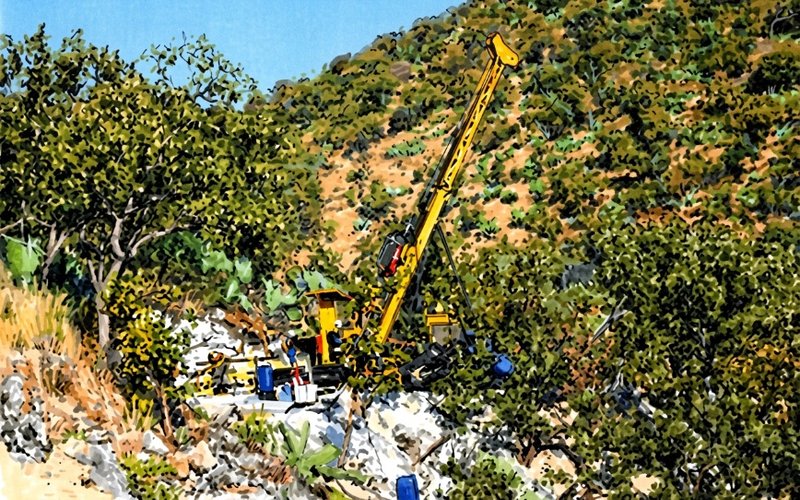
A total of 31 channel samples have been submitted for laboratory analysis, while environmental authorisation has been confirmed for a second phase of diamond drilling designed to test interpreted breccia pipes and feeder-CRD intersections.
The sampling program comprised 21 reconnaissance channel samples from exposed mineralised zones and 10 systematic channel samples from newly documented underground workings, with assay results expected over the coming weeks.
EV Resources is using the expanded geological framework to refine drill targets and support its path towards a maiden JORC Mineral Resource at the project.
Feeder Systems Expand Target
Detailed mapping, underground inspections, and channel sampling across six priority areas identified the four feeder structures and improved EV Resources’ understanding of the structural controls on mineralisation.
Field observations indicate mineralisation is controlled by a combination of CRD horizons, feeder veins, structural intersections, hydrothermal breccias, and silicified regional fault and dyke systems.
"Every time our team walks this ground, the system gets bigger,” interim chief executive officer Miguel Barahona said.
“These are the types of geological features we are looking for as evidence of hydrothermal pathways responsible for antimony mineralisation.”
“31 samples are now with the laboratory, and those results will tell us where the drill rig goes next as we build toward a maiden resource at Los Lirios.”
Exploration Footprint Extended
A geological review of the San Benito–Cofradía corridor identified the Carrizales area, where hydrothermal breccias, CRD mineralisation, and two previously undocumented historical underground workings indicate additional exploration potential.
The Carrizales working extends for about 18m and intersects the San José CRD before encountering the Carrizales hydrothermal breccia over a 0.55m channel width, with samples collected across the exposed mineralised intervals.
At nearby Santiago, antimony mineralisation and intense hydrothermal alteration coincide with a previously defined geophysical anomaly, supporting an interpretation of a possible hydrothermal breccia pipe although its geometry, size and continuity remain to be confirmed by drilling.
Further south, mapping across the Cofradía–San Manuel corridor identified the strongest visual mineralisation of the campaign at Tetlate Shaft 3, where coarse stibnite crystals occur within hydrothermal breccia alongside barite, cervantite and trace valentinite.
Drilling Pathway Taking Shape
The next work phase will combine pending assay results with additional trenching, test pits, detailed mapping, and systematic channel sampling across projected extensions and breccia targets.
Ground geophysics is planned across the Cofradía–San Manuel and Santiago–Carrizales corridors to better define breccia geometry before drilling.
A phased diamond drilling program will then test interpreted breccia pipes and intersections between the Santo Niño, San Ramón, and JIU feeder structures and the San José CRD under the confirmed Phase 2 drilling authorisation.
EV Resources also plans to integrate geological, analytical, and geophysical information into a three-dimensional geological model to guide targeting and support development of the maiden JORC resource.
Get the wire before the market opens.
The ASX small-cap stories that matter, filed before 9am AEST. Curated by the Small Caps desk.