

- 01Vega: record caesium; peak 29.79% Cs2O.
- 0228m@8.05%;18.3m@11.84%;2.2m@26.48%.
- 03Rigel:6.2m@5.12%;Helios:1.0m@21.52%.
PMET Resources (ASX: PMT) has reported the widest and highest-grade caesium drill intercepts to date from the Vega Zone at its wholly owned Shaakichiuwaanaan project in Quebec.
The results form part of the company’s 2025 drilling campaign at the CV13 pegmatite, and include multiple thick, high-grade intersections dominated by pollucite mineralisation.
The latest assays confirm an expanded footprint and width of caesium mineralisation at Vega, alongside additional high-grade results from the Rigel Zone and confirmation of caesium at the newly discovered Helios Zone.
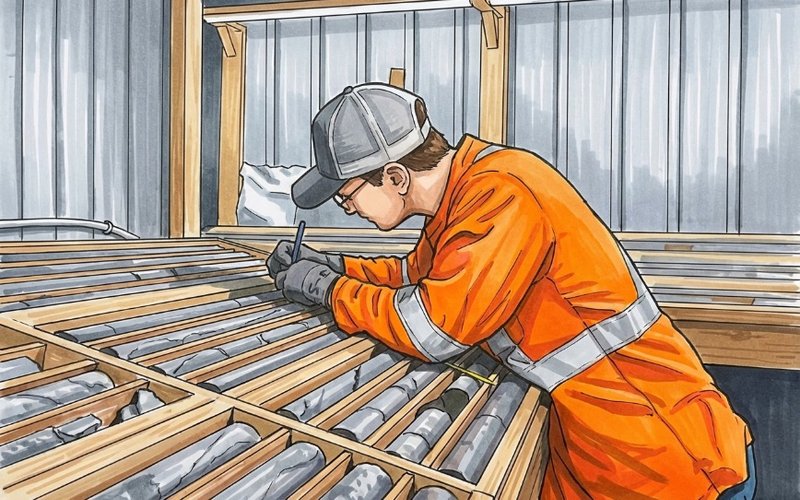
The company reported caesium assay results for 8,596 metres of drilling across 52 holes at the CV13 Pegmatite, with further caesium results from 1,176m of drilling still pending.
The drilling also returned the highest-grade caesium sample reported at the property to date, with a peak assay of 29.79% caesium oxide.
Vega Caesium Zone Results
Other key intersections in the latest results included 28.0m at 8.05% caesium oxide including 18.3m at 11.84%, 18.2m at 7.13% caesium oxide including 3.0m at 23.63%, and 5.5m at 14.83% caesium oxide including 2.2m at 26.48%.
Based on the new assay data, the interpreted footprint and width of caesium mineralisation at Vega has increased beyond the limits defined by previous drilling.
High-grade caesium mineralisation was also intersected in infill drilling at the Rigel Zone, with the best result returning 6.2m at 5.12% caesium oxide including 2.1m at 13.68%.
The company noted that results from the 2025 drilling program have altered the interpreted eastern footprint of the Rigel Zone, which will be updated in a future Mineral Resource Estimate.
Drilling at the newly discovered Helios Zone confirmed high-grade caesium close to surface, including an intersection of 1.0m at 21.52% caesium oxide, with mineralisation traced over an area of approximately 180m by 80m that remains open in several directions, with additional caesium assay results pending.
Potential and Scale Highlighted
The CV13 pegmatite – which hosts the world’s largest in-situ pollucite-hosted caesium mineral resource – forms part of the broader Shaakichiuwaanaan project, which also contains significant lithium and tantalum mineralisation.
Executive vice president of exploration Darren Smith said the results highlighted both the grade potential and scale of the caesium system at the property.
“With multiple intercepts exceeding 25% caesium oxide, dominant pollucite mineralogy, and scale already demonstrated through defined mineral resources, the opportunity to further enhance shareholder value through this deposit is meaningful,” he said.
The company expects to report remaining caesium assays once outstanding overlimit analyses are completed and will integrate the new results into updated geological models and future mineral resource estimates.
Work is also continuing to advance geological modelling across the CV5 and CV13 pegmatites ahead of further resource updates and an updated feasibility study for the CV5 Pegmatite scheduled for the second half of 2026.
Get the wire before the market opens.
The ASX small-cap stories that matter, filed before 9am AEST. Curated by the Small Caps desk.