

- 01Phase 1 FEED delivered on time and within budget.
- 02Phase 2 by June 2026; DNV class approval.
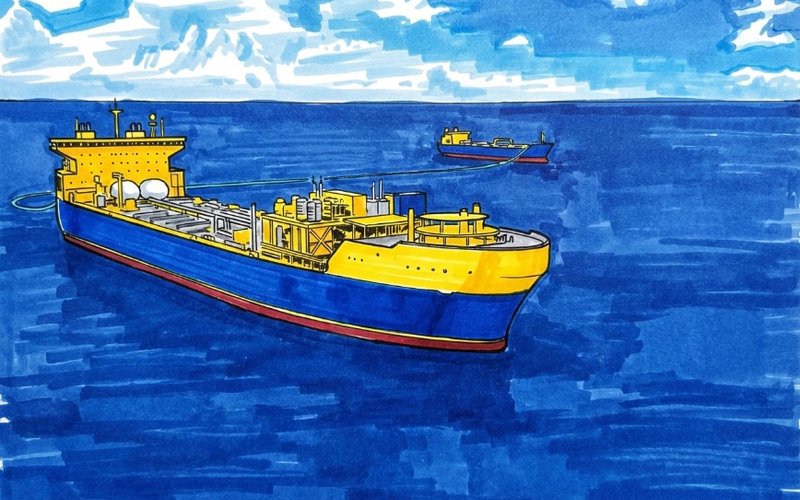
- 03Tank: 25k m3 LCO2; part of 100k m3 FSIU.
Provaris Energy (ASX: PV1) has completed and delivered Phase 1 of the Front End Engineering and Design (FEED) for its large-scale liquefied carbon dioxide tank on time and within budget in January 2026, marking a major milestone in the development program.
The delivery confirms progress on a proprietary 25,000 cubic metre low-pressure LCO₂ tank being developed with Yinson Production for integration into a Floating Storage Injection Unit (FSIU) supporting carbon capture and storage projects.
Yinson has advised Provaris to proceed directly into Phase 2 of the FEED program under the joint development agreement, with completion targeted for June 2026.
The milestone positions the program to advance toward class approval and final fabrication readiness ahead of Yinson’s targeted final investment decision in late 2026.
FEED Program Progress and Scope
Provaris completed Phase 1 FEED deliverables covering detailed engineering, materials, and weld testing for the proprietary LCO₂ tank design.
The tank is intended for integration into Yinson Production’s FSIU concept with total storage capacity of 100,000 cubic metres, initially planned for deployment at the Havstjerne carbon capture and storage project in the North Sea.
The design also has broader application across LCO₂ carriers and storage and terminal infrastructure, extending its relevance beyond a single project.
Phase 2 FEED will focus on finalising detailed structural and finite element modelling, validating fabrication processes, and progressing class approval with DNV toward a General Approval for Ship Application.
Himile Manufacturing MoU
Alongside FEED progress, Provaris and Yinson have advanced parallel workstreams to de-risk manufacturability and cost through a memorandum of understanding with Himile Heavy Equipment.
Under the agreement, Himile will assess fabrication of the proprietary LCO₂ tanks at its Rushan facility in China, including facility upgrades, robotic fabrication cell installation, cost estimates, and delivery timelines.
Provaris will provide preliminary designs for automated fabrication systems, robotic and laser-welding equipment, and a digital twin modelling a fully automated production line.
Yinson will assess tank handling and integration from the Rushan facility into shipyards for FSIU construction, linking fabrication outcomes directly to vessel development schedules.
Fewer Tanks Per Vessel
The large-scale LCO₂ tank design targets capacities three to four times larger than conventional Type C tanks, with the aim of reducing the number of tanks required per vessel.
Fewer tanks translate into lower capital costs through improved hull utilisation and simplified systems, as well as reduced operating costs through streamlined operations and maintenance.
These efficiency gains are intended to lower the cost per tonne of carbon dioxide transported and stored, addressing a key constraint in scaling carbon capture and storage supply chains.
The combined FEED and manufacturing workstreams are structured to deliver a fully costed, class-approved tank design suitable for near-term deployment in offshore CCS projects.
Proud Company Milestone
“We are proud to have achieved this milestone in the development and delivery of our pioneering 25,000 cubic metre LCO₂ tank FEED program, on schedule and within budget,” Provaris chief technical officer Per Roed said.
“These advancements position us to deliver real value to Yinson and other prospective partners and customers seeking efficient, cost-effective solutions for CO2 supply chains at scale."
His counterpart at Yinson Production, Lars Gunnar Vogt, called the MoU an “important step in translating advanced tank design into scalable, industrialised fabrication.”
“Working with Provaris and Himile allows us to assess not just technical feasibility, but also manufacturability, cost, and delivery timelines—factors that are critical as we develop FSIU concepts for carbon capture and storage value chains,” he added.
Provaris Energy will now progress Phase 2 FEED through to June 2026, incorporating manufacturing cost inputs and continuing class approval, while supporting Yinson Production’s advancement of its FSIU concept toward final investment decision.
Get the wire before the market opens.
The ASX small-cap stories that matter, filed before 9am AEST. Curated by the Small Caps desk.