
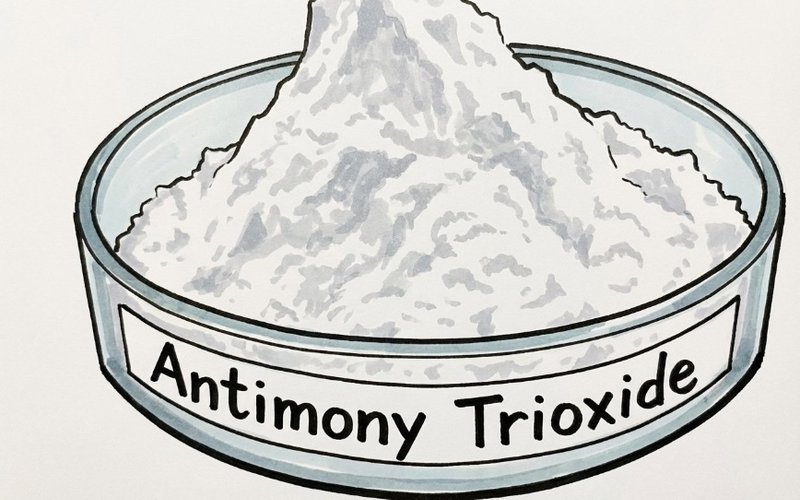
Resolution Minerals (ASX: RML) has produced an intermediate antimony trioxide product grading 99.38 weight per cent from large stibnite samples taken from the historical open pits at Antimony Ridge in Idaho.
The result came from conventional pyrometallurgical volatilisation test work completed by Kingston Process Metallurgy in Ontario, and marks the latest step in the company’s push to establish a domestic US antimony processing pathway.
Further refining pyrometallurgical test work is now underway, hydrometallurgical test work is progressing at the Australian Nuclear Science and Technology Organisation (ANSTO) in Australia and concentrate studies covering antimony, tungsten, and gold are continuing at IMO in Perth.
Antimony Ridge sits within Resolution’s broader Horse Heaven antimony-tungsten-gold-silver project, where the company is also advancing 3D vein modelling, bulk sampling plans, and a major 2026 drilling program at Golden Gate.
Initial Processing Baseline Established
Resolution produced the intermediate antimony trioxide from high-grade stibnite using roasting at about 700 degrees Celsius to volatilise the material into antimony trioxide gas before cooling and collecting it as a powder.
Appendix results show the product contained 99.38 weight per cent antimony trioxide, with low reported impurity levels including 0.13 weight per cent arsenic, 0.09 weight per cent sulphur, 0.07 weight per cent silicon and 0.04 weight per cent iron.
The company described pyrometallurgy as its base-case conventional antimony processing option and has already approached a number of third parties in relation to that pathway.
It expects final product results from the ongoing refining work in the coming weeks.
Hydrometallurgy and Concentrate Work
Hydrometallurgical processing test work on Antimony Ridge samples is underway at ANSTO as Resolution assesses a second processing route for the project.
At the same time, IMO Labs in Perth are running test work on options to concentrate antimony ore, tungsten ore, and gold-bearing samples from Horse Heaven.
Senior metallurgist Adam Roper said the initial pyrometallurgical results were encouraging, particularly the low impurity levels.
“Resolution’s goal is to develop a processing hub in Idaho for stibnite and I’m relishing the opportunity to bring this to fruition, from mine to product,” he said, citing the lack of modern antimony processing options in the US.
“The Johnson Creek Mill site, at the base of Antimony Ridge, is being considered as a fast track option for potential development of a local processing site, given it has the necessary infrastructure on site, with power and water, and is on 10 acres of private land owned 100% by RML.”
Wider Horse Heaven Push
The metallurgy update follows recent 3D modelling of numerous known antimony and silver-bearing veins, vein swarms, and stockworks across an area measuring 1,000m by 700m, which Resolution said points to significant size potential and expanding scale at Antimony Ridge.
The project has also been selected for FAST-41 transparency coverage by the US Permitting Council, a designation expected to accelerate permitting timelines ahead of an application covering 250 drill holes and large-scale bulk sampling.
Resolution plans to begin a significant bulk sampling programme of high-grade antimony ore once its plan of operations is approved and expects Antimony Ridge to become a cornerstone asset in its strategy to supply antimony, tungsten and gold from central Idaho.
Managing director Ari Zaetz said the company was using the FAST-41 permitting momentum to advance local processing plans in parallel as it works toward supplying antimony and tungsten into US demand.
Beyond Antimony Ridge, Resolution is preparing to start a Phase 2 drilling program in May at Golden Gate, with diamond core drilling to define the scale of gold and tungsten mineralisation at Golden Gate and Golden Gate South and support progress toward a maiden mineral resource estimate.
