

- 01Ludwig Phase 2 PFS: 21,100 t/yr Li2CO3; 3,125 GWh heat.
- 02Capex €1.261b; NPV €1.727b; IRR 20.2%.
- 03Indicated 1.251 Mt LCE; total 3.481 Mt.
Vulcan Energy (ASX: VUL) has completed a preliminary feasibility study for Project Ludwig, positioning the integrated lithium and renewable heat development as the planned second phase of its Upper Rhine Valley brine field growth strategy.
The project, about 60 kilometres north of Phase One Lionheart in Germany, is designed to apply the same regional brine system, proprietary extraction platform, in-house drilling capability, permitting experience, and development organisation to a new production area.
Project Ludwig is targeting 21,100 tonnes a year of battery-grade lithium carbonate and 3,125 gigawatt-hours of renewable heat annually across a planned 30-year operating life.
The PFS estimates development capital of €1.261 billion including a 15% contingency, with a post-tax net present value discounted at 8% of €1.727 billion and a post-tax internal rate of return of 20.2%.
Capital intensity is estimated at about 15% below Lionheart on an equivalent lithium carbonate equivalent capacity basis, although the projects are at different development stages and use separate financial assumptions.
Lionheart Blueprint Carried Forward
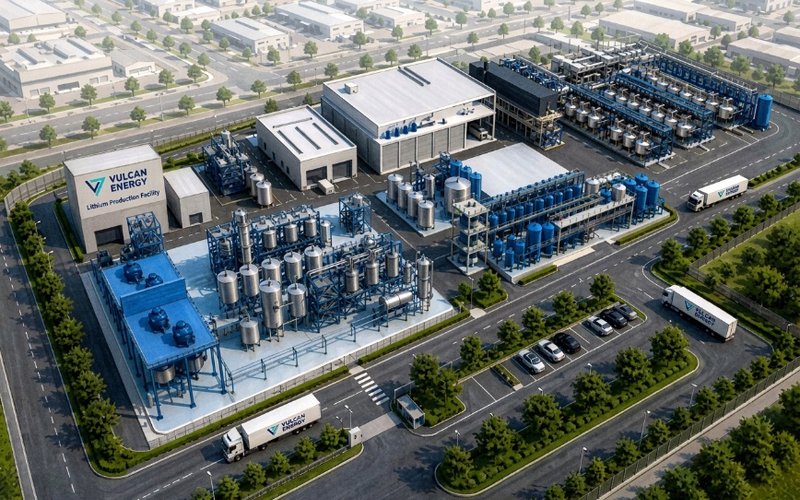
Vulcan has designed Ludwig around 14 production wells and 14 injection wells across five well sites, linked by about 16km of pipelines to a central lithium extraction, conversion, and heat utilisation facility.
Lithium-rich geothermal brine would be processed using Vulcan’s proprietary adsorption-based direct lithium extraction technology incorporating VULSORB sorbent technology before conversion into battery-grade lithium carbonate, with geothermal heat used internally and surplus heat available for external customers.
The integrated layout removes the need for on-site power generation and is intended to simplify infrastructure, reduce project interfaces and carry engineering, permitting, drilling and execution lessons from Lionheart into the next development.
Project Ludwig’s Indicated mineral resource has increased 91% from 655,000t to 1.251Mt LCE, while combined Indicated and Inferred mineral resources across the Ludwig and Therese licences have risen 25% to 3.481Mt LCE.
The 517,000t life-of-project production target is supported solely by Indicated mineral resources, with no Inferred mineral resources included in the target and no ore reserves or geothermal reserves yet estimated.
Project Definition and Optimisation
“Project Ludwig represents the strategic next step in our phased development of the Upper Rhine Valley Brine Field—we’re applying the technical, operational, and commercial blueprint of Lionheart to a second development area with similar resource and geological characteristics,” chief executive officer Cris Moreno said.
“The growth potential of our assets is significant, and supports the potential for numerous future phase projects where our engineering and construction teams can transition between developments.”
Vulcan is now moving Ludwig into further project definition and optimisation, including three-dimensional seismic acquisition, appraisal drilling, reservoir modelling, and a definitive feasibility study before any final investment decision.
The company has started an asset-level strategic partner process and intends to seek minority project equity while retaining majority control, alongside project finance and potential public funding as Ludwig moves towards development.
“We look forward to advancing Project Ludwig using our existing blueprint in the same brine field, with the same bankable lithium extraction technology—in doing so, we're creating shareholder value without taking our focus away from delivering Lionheart,” Mr Moreno added.
Get the wire before the market opens.
The ASX small-cap stories that matter, filed before 9am AEST. Curated by the Small Caps desk.